Showing posts with label Soccer. Show all posts

Fabio Capello: I Didn't Make Mistakes And England Are On Track At World Cup 2010

England manager Fabio Capello has insisted that there are no massive causes for concern after the Three Lions' 1-1 draw with the USA in their opening game of the World Cup on Saturday.

Defender Ledley King looks set to be ruled out for the rest of the tournament after sustaining a groin injury and being replaced by Jamie Carragher at half-time against the Americans.

And goalkeeper Rob Green blundered badly to hand the USA an equaliser, but Capello has been unequivocal in his assessment of the situation.

As far as the Italian is concerned, he made the right selection calls at the weekend and there is nothing to be overly worried about in terms of the rest of the campaign.

"I didn't make mistakes and I'm not worried for the future," he told reporters in South Africa.

"We played a good game and, for me, the most important thing is to see the spirit of the team and also the physical condition of the players.

"I was worried about the result because it is possible to lose a game like this.

"We had seven or eight chances. That is good football.

"But it is not enough just to create the chances. To win we have to score.

"Twice we were in front of the goal, once with Shaun Wright-Phillips, once with Emile (Heskey). Alone, Absolutely alone."

Capello was also taking an analytical approach when it came to how to deal with the error made by Green, a player with whom the Italian has been very happy in recent games.

"We must think about this problem psychologically," the England coach added.

"Goalkeepers make mistakes. This is part of football. You have to accept that.

"I decided on Green because he played very well in the last game against Platinum Stars and also against Mexico at Wembley, and in the second-half last night he played very well and made a really important save. But a mistake remains a mistake.

"Now I have to speak with him, then I will decide what to do."
Read More......

Japan 1-0 Cameroon: Keisuke Honda Tames The Very Domitable Lions

World Cup 2010 : 14 June

Japan recorded their first ever World Cup win away from home soil on Monday, picking up a 1-0 victory over Cameroon.

The first half was a miserable affair, yet it somehow produced a goal from Keisuke Honda. Stephane Mbia came closes for the Indomitable Lions in the closing stages of the match, striking a wonderful shot against the face of the Japanese bar.

In keeping with many of the matches at South Africa 2010, the start to this encounter was extremely pedestrian, with neither side making any kind of offensive headway in the early stages of the game as possession was frequently given away cheaply in front of a disappointingly empty stadium.

Genuine spells of pressure for either side were infrequent in the early stages, while ingenuity was an even scarcer commodity in the advanced areas of the field. Pierre Webo tried to bustle down the right channel for the Africans, but his cross was hacked away from the centre of the goal. For their part, the Japanese were retaining the ball better in the centre of the park, though posing no threat to Souleymanou Hamidou’s net.

Half an hour of the match passed without a solitary shot mustered by either side, with the Indomitable Lions swamped in the middle of the pitch by waves of Japan defenders, who seemed to roll effectively wherever the ball was. Blue Samurai goalkeeper Eiji Kawashima provided hope for the Africans, fumbling a couple of deep free kicks only to be bailed out by his defenders.

On 37 minutes, Eyong Enoh finally gave the crowd their first shot to cheer with a tame low drive from the edge of the penalty box trundling into the arms of Kawashima.

Within seconds, Japan managed to grab the lead. Diasuke Matsui, on his unnatural right, was given room to cut onto his favoured left foot by Benoit Assou-Ekotto. The Grenoble man’s centre was then misjudged by Stephane Mbia, whose error allowed Honda to control the ball at the far post and slam into the net from six yards.


Samuel Eto’o, placed away on the right wing, had been anonymous in the first half, but it only took him four minutes following the restart to make an impression on the second period. Dancing away from a couple of challenges, he cut the ball back from the byline, but Maxim Choupo-Moting bent his shot wide of goal.

Cameroon’s play was certainly brisker in the early stages of the second half, though they were still making little headway. Choupo-Moting cut in from the flank to shoot wide from the edge of the box, but Paul Le Guen’s side certainly didn’t look liable to level.

Yasuhito Endo rather summed up the attacking threat Japan posed in the second half when he hammered a free kick too long for his team-mates when well positioned to deliver a dangerous cross. But the tenacious and well-drilled Japanese defence was such that there rarely looked likely to be any danger of the forwards needing to score again for the Asians to take three points.

Le Guen acted by introducing Geremi and Mohammadou Idrissou, but the pattern of the game changed none.

A rare Japanese attack nearly brought with it a second goal as Makoto Hasebe prodded a meaningful shot towards the corner of Hamidou’s goal from 25 yards. The goalkeeper got down to palm the ball clear and was partially saved as Shinji Okazaki, who was closing in on the follow-up, was deemed offside.

Time was by now an extremely scarce commodity and Cameroon were thrusting forward at every opportunity. With only five minutes remaining a stunning hit from Mbia cracked the face of the crossbar as he took aim from 25 yards out. Had the Marseille man’s shot been six inches lower, it would have been a real contender for goal of the tournament, but the Indomitable Lions were left cursing their luck as Achille Emana’s deflected follow-up was deflected straight at the goalkeeper.

This late enterprise came too late to bring with it a levelling goal, leaving Cameroon to approach their next game against Denmark knowing that defeat will see them likely eliminated. Japan, meanwhile, can optimistically look forward to the Netherlands, despite showing little enterprise in their opening game.

source
Read More......

Francesco Totti's Roma Return Suffers Another Setback - Report


Francesco Totti is a long way from making his Roma return from injury as he continues to skip training with tendinitis, according to Leggo.

Nothing more than physiotherapy is the order for Totti as inflammation to his right knee continues to keep him away from the training pitch.

He is now expected to return towards the end of the month, giving him some time to prepare for the clash against Inter on March 31.

The Giallorossi's medical staff are working hard to get the ace back in action, but they are unlikely to rush his return as the risk of worsening the injury is always present.
Read More......

Cristiano Ronaldo & Portugal National Team Could Grow Mustaches For World Cup - Report

The Portuguese national team could earn some publicity for their off-the-field antics this summer in South Africa. As reported by Spanish sports daily Sport, Cristiano Ronaldo and the Portuguese team could grow mustaches for the World Cup.

The movement has been started by a Facebook group that has asked for the players to grow mustaches and the initiative has slowly begun to pick up steam as more than 2,000 fans have joined the cause.

During Portugal's midweek international friendly against China, one could see a number of fans in the crowd holding up a large banner in support of the group and chanting, 'We want a Seleccion with moustaches in South Africa'!

The movement is said to reference to what is stereotypically thought of as the 'traditional Portuguese man' and Sport has taken the liberty of displaying a doctored photo with some of the Portuguese players
Read More......

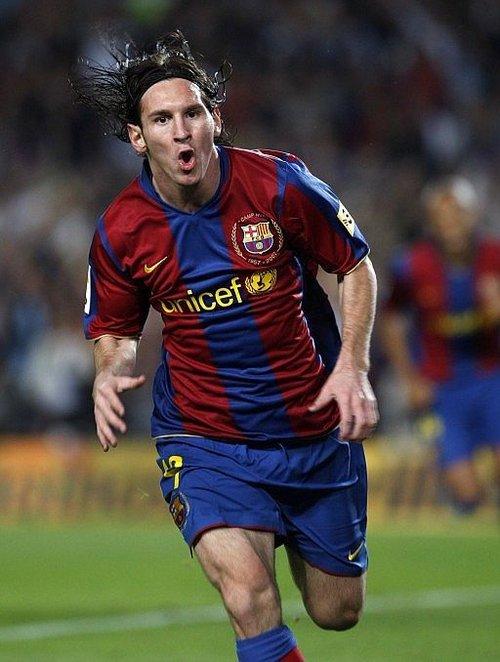
History-maker Messi seeks first Club World Cup


ABU DHABI (AFP) - Barcelona will go into the FIFA Club World Cup as favourites to win the competition for the first time, but winger Lionel Messi says they must learn the lessons from their last involvement.

The Club World Cup is the only international honour missing from Barcelona's well-stocked trophy cabinet after their previous attempt to win it, in 2006, ended in a 1-0 defeat to Brazilian side Internacional.

"I think the most important lesson we've learned is not to be over-confident and to get to know our opponents in depth," said Messi, in an interview with the FIFA website on the eve of the December 9-19 tournament here.

"The last time we maybe thought that the other sides were a bit below us and that's something we can't afford to let happen again if we want to be champions."

Victory in the tournament would crown a remarkable year for current Spanish league leaders Barcelona, who last season won the Champions League, Spanish league and King's Cup to claim an unprecedented treble.

It has also been an unforgettable 12 months for Messi, who last week became the first Argentine player to be named European Footballer of the Year when he was awarded the prestigious Ballon d'Or by France Football magazine.

"It's one title the club has never won and it's one title that?s eluded most of the players at Barca," said Messi.

"It's also the last competition of what's been a historic 2009 and we want to end the year in style. On a personal level, I'm really looking forward to it because it will help me keep on developing."

Barcelona's strongest challenge is likely to come from Messi's homeland, with South American champions Estudiantes set to enter the competition at the semi-final stage alongside the Catalan club.

Estudiantes won the Intercontinental Cup, the precursor to the current competition, by beating Manchester United in 1968 and finished runners-up in the two years afterwards.

Their participation in Abu Dhabi marks a return to the event after a 39-year absence, but a strand of continuity running between the sides can be found in the shape of Estudiantes midfielder Juan Sebastian Veron, whose father Juan Ramon starred in the 1968 victory over United.

"It's an enriching experience for all of us, for the older players, who will be leading the way, and the younger ones, who'll be taking up the baton in the future," said Veron.

"You have to make them aware of what it means to be there, how fantastic it is. It's also important that nobody sits back and says 'I've made it now'. With a tournament like this you have to want to come back and experience it again."

The competition's other teams cannot boast players with reputations to match Messi or Veron, but all - with the exception of host club Al-Hahli - are continental champions.

South Korean side Pohang Steelers (Asia), Congolese outfit Tout Puissant Mazembe (Africa) and Mexico's Atlante (CONCACAF) will provide the biggest threat to the two heavyweights.

Auckland, who play Al-Hahli in the tournament's opening game on Wednesday, are the reigning champions from the Oceania region.

"We didn?t score a single goal in 2006 and that was a big disappointment for us," said Auckland captain Ivan Vicelich.

"We've prepared well this year though, and we're going to score a lot of goals. We've been talking about this match for weeks now and we need to go out and execute our gameplan."

The winners of the match between Al-Hahli and Auckland will join TP Mazembe, Atlante and Pohang Steelers in the quarter-finals, where a potential meeting with Pep Guardiola's Catalan conquerors Barcelona will be at stake.
Read More......

Panathinaikos fires coach over after league slip

ATHENS, Greece (AP)—Panathinaikos has fired Dutch coach Henk Ten Cate after the club lost its lead in Greek championship to rival Olympiakos.

In a statement Tuesday, the club named Nikos Nioplias as his replacement. Nioplias is currently the coach of Greece’s under-21 national team.

Olympiakos took the lead in the Greek title race after beating Panathinaikos 2-0 on Nov. 29. It leads the standings with 33 points from 13 games, one point ahead of Panathinaikos.

The 54-year-old Ten Cate, a former Chelsea assistant manager, took over in Athens last season but failed to break the dominance of Olympiakos which has won every league title but one since 1997.
Read More......

Given save can transform City fortunes - Hughes


MANCHESTER, England (AFP) - Mark Hughes says Shay Given's penalty save that secured Manchester City an unlikely 2-1 victory over Chelsea here on Saturday could be the turning point in the club's entire season.

The Republic of Ireland international kept out Frank Lampard's late effort to ensure goals from Emmanuel Adebayor and Carlos Tevez cancelled out a Chelsea opener, courtesy of an Adebayor own goal, and ended City's run of seven consecutive Premier League draws.

This win at a rain-sodden Eastlands also cut Chelsea's lead at the top of the table to two points over champions Manchester United and opened up the possibility, however distant, of City competing for the title in the second half of the campaign.

At the end of a week in which Hughes also led his team to the League Cup semi-finals with victory over Arsenal, the manager agreed the penalty save could have huge long-term significance.

"Quite possibly," said Hughes when asked if it could be a turning point.

"It was a fantastic save. There are a lot of things you don't expect to happen and you don't expect Frank Lampard to miss a penalty."

Former Manchester United, Chelsea and Wales striker Hughes added: "We made a real effort this week to work exceptionally hard because, as I keep saying, you can't take short cuts, you can't not put the work and effort in or you get beaten by the top teams in the Premier League.

"We now know what it takes to win against the bigger teams. Once we get the knowledge of how to beat the lesser sides, we will be okay."

Victory left big-spenders City sixth in the table, 11 points adrift of Chelsea, and Hughes said: "Arsenal and Chelsea are there to be beaten, they are the challenge for us.

"We want to supersede them at some stage and at the moment we are just challenging, trying to make it difficult for them."

Hughes, however, refused to include City in the title race just yet, saying: "We're not talking in terms of winning titles. We are trying to progress.

"We are talking about a team that 12 months ago was looking at relegation. We spent money, yes, and that will always be quoted when Manchester City are mentioned but we are just trying to be better than we were."

Hughes also praised match-winner Tevez, himself an ex-Manchester United forward, who has put in some strong recent performances after overcoming early-season fitness and injury problems.

"He has been fantastic," said Hughes after seeing Tevez beat Petr Cech with a 56th-minute free-kick awarded for a foul by Ricardo Carvalho.

"And he is now getting back to the levels of fitness he needs to have."

Carlo Ancelotti laid the blame for Chelsea's defeat firmly at the door of referee Howard Webb, who he accused of making mistakes in the build-up to both of City's goals, although he stressed the loss was no cause for concern.

"We're disappointed," said Ancelotti. "The referee made two important mistakes. I think Micah Richards did handle the ball and the second situation, I think Carvalho kicked the ball clear, it was a clear situation.

"I'm surprised. I consider Webb a fantastic referee with experience yet he made those two mistakes, but I don't want to speak about this. It happened and we move forward."

He added: "We don't need a reaction. We are top of the league by two points, we don't have reason to be worried."
Read More......

2010 World Cup Exclusive: North Korea's An Yong Hak - We Will Fight For Second Place In Group Of Death

North Korea

Midfielder An Yong Hak is looking forward to facing Portugal, Brazil and the Ivory Coast at the 2010 World Cup and has targeted second place.

Group G was immediately named The Group of Death on Friday after the draw in Cape Town and few are giving North Korea, playing in only their second World Cup and their first since 1966, a chance.

An, who was an ever-present in the team’s qualification campaign, knows that it will be tough but is excited about the challenge.

“When I saw Group G, I smiled a bitter smile,” An told Goal.com.

“As I said before, I want to play against the big teams because there are no weak teams in the World Cup. But I'm excited that we will play against Brazil, Portugal and Ivory Coast. If we don’t play these teams at the World Cup, when can we?”

The 31 year-old agrees that Brazil should top the group but is ready to fight to make it to the second round.

“I think, even Brazil will not have an easy time but they will finish first. Then North Korea will compete with Portugal and Cote d'Ivoire for second place in the group, hopefully.”

“There are so many star players so I can't say just one. Kaka, Cristiano Ronaldo, Didier Drogba, Robinho, Deco and the Toure brothers.

"I know that playing against such players is not easy task but I will never give up and I will do my best to keep the ball off them.

Read More......

Messi wins Ballon d'Or


Barcelona forward Lionel Messi has been named the European Footballer of the Year.

The Argentinean won the Ballon d'Or by a record margin from last year's winner Cristiano Ronaldo.

The Argentinian won an unprecedented treble last season as the Catalan side won the Champions League, the Liga title and the Copa del Rey.

Messi was the top scorer in last year's Champions League with nine goals, including a goal in the 2-0 final defeat of Manchester United in Rome.

Messi, who tallied 473 of a possible 480 points, largely dominated the voting and won with a record-margin of 240 points. Real Madrid winger Ronaldo had 233 and Xavi had 170.

"Honestly, I knew that I was among the favourites because Barcelona had a fruitful year in 2009," he told France Football magazine.

"But I didn't expect to win with such a margin. The Golden Ball is very important to me.

"All the players who won it were great players, and some great players never won it."

Barca teammates were also recognised with midfielder Xavi taking third place with 170 points while Iniesta was fourth on 149.

In fifth place was Cameroon striker Samuel Eto'o, who left Barca to join Inter. He was Barca's other scorer in the 2-0 final win over United.

Votes cast
1. Lionel Messi (Argentina, Barcelona) : 473 points
2. Cristiano Ronaldo (Portugal, Manchester United then Real Madrid) : 233 pts
3. Xavi (Spain, Barcelona) : 170 pts
4. Andres Iniesta (Espagnol, Barcelona): 149 pts
5. Samuel Eto'o (Cameroon, Barcelona then Inter): 75 pts
6. Kaka (Brazil, Milan then Real Madrid): 58 pts
7. Zlatan Ibrahimovic (Sweden, Inter then Barcelona): 50 pts
8. Wayne Rooney (England, Manchester United): 35 pts
9. Didier Drogba (Ivory Coast, Chelsea): 33 pts
10. Steven Gerrard (England, Liverpool): 32 pts
11. Fernando Torres (Spain, Liverpool): 22 pts
12. Cesc Fabregas (Spain, Arsenal): 13 pts
13. Edin Dzeko (Bosnia, Wolfsburg): 12 pts
14. Ryan Giggs (Wales, Manchester United): 11 pts
15. Thierry Henry (France, Barcelona): 9 pts
16. Luis Fabiano (Brazil, Sevilla), Nemanja Vidic (Serbia, Manchester United), Iker Casillas (Spain, Real Madrid): 8 pts
19. Diego Forlan (Uruguay, Atletico Madrid): 7 pts
20. Yoann Gourcuff (France, Bordeaux): 6 pts
21. Andrei Arshavin (Russia, Arsenal), Julio Cesar (Brazil, Inter), Frank Lampard (England, Chelsea): 5 pts
24. Maicon (Brazil, Inter Milan): 4 pts
25. Diego (Brazil, Werder Bremen then Juventus): 3 pts
26. David Villa (Spain, Valence), John Terry (England, Chelsea): 2 pts
28. Franck Ribery (France, Bayern Munich), Yaya Toure (Ivory Coast, Barcelona): 1 pt
30. Karim Benzema (France, Lyon then Real Madrid): 0 pt

Previous winners:
1956 - Stanley Matthews, Blackpool
1957 - Alfredo Di Stefano, Real Madrid
1958 - Raymond Kopa, Real Madrid
1959 - Alfredo Di Stefano, Real Madrid
1960 - Luis Suarez, Barcelona
1961 - Omar Sivori, Juventus
1962 - Josef Masopust, Dukla Prague
1963 - Lev Yashin, Dynamo Moscow
1964 - Denis Law, Manchester United
1965 - Eusebio, Benfica
1966 - Bobby Charlton, Manchester United
1967 - Florian Albert, Ferencvaros
1968 - George Best, Manchester United
1969 - Gianni Rivera, Milan
1970 - Gerd Mueller, Bayern Munich
1971 - Johan Cruyff, Ajax
1972 - Franz Beckenbauer, Bayern Munich
1973 - Johan Cruyff, Barcelona
1974 - Johan Cruyff, Barcelona
1975 - Oleg Blokhin, Dynamo Kyiv
1976 - Franz Beckenbauer, Bayern Munich
1977 - Allan Simonsen, Borussia Moenchengladbach
1978 - Kevin Keegan, Hamburg
1979 - Kevin Keegan, Hamburg
1980 - Karl-Heinz Rummenigge, Bayern Munich
1981 - Karl-Heinz Rummenigge, Bayern Munich
1982 - Paolo Rossi, Juventus
1983 - Michel Platini, Juventus
1984 - Michel Platini, Juventus
1985 - Michel Platini, Juventus
1986 - Igor Belanov, Dynamo Kyiv
1987 - Ruud Gullit, Milan
1988 - Marco Van Basten, Milan
1989 - Marco Van Basten, Milan
1990 - Lothar Matthaeus, Inter
1991 - Jean-Pierre Papin, Marseille
1992 - Marco Van Basten, Milan
1993 - Roberto Baggio, Juventus
1994 - Hristo Stoitchkov, Barcelona
1995 - George Weah, Milan
1996 - Matthias Sammer, Borussia Dortmund
1997 - Ronaldo, Inter
1998 - Zinedine Zidane, Juventus
1999 - Rivaldo, Barcelona
2000 - Luis Figo, Real Madrid
2001 - Michael Owen, Liverpool
2002 - Ronaldo, Real Madrid
2003 - Pavel Nedved, Juventus
2004 - Andriy Shevchenko, Milan
2005 - Ronaldinho, Barcelona
2006 - Fabio Cannavaro, Real Madrid
2007 - Kaka, Milan
2008 - Cristiano Ronaldo, Manchester United
2009 - Lionel Messi, Barcelona
Read More......

Soccer: Intercontinental (Toyota) Cup

The Intercontinental Cup was first offered in 1960 for competition between the winners of the European Champions League and the Copa Libertadores.

The competition followed a best-of-three format from 1960 through 1968 and switched to a two-game, total-goals in 1969.

Toyota began sponsoring the cup in 1980. From that year through 2004, it was a one-game championship, played annually in Tokyo.


In 2005, the Intercontinental Cup was merged with the FIFA Club World Championship to become the FIFA Club World Cup.
Read More......

Batistuta

PROFILE

Date Of Birth: February, 1 , 1969.
Place: Avellaneda, Sta Fé - Argentine
Height: 185 cm
Weight: 73 Kg
Zodiac: Aquarius
Nickname: Batigol, Bati, Gabi
Marital Status: married 10 years with Irina has 3 children: Thiago, Lucas and Joachin
Team: ASRoma - Italy
Official Website: www.batistuta.com

PERSONAL'S DROPS

Movie: 'As Good As It Gets' with Jack Nicholson
TV program: he likes to watch CNN news
Singer: Phil Collins and Bruce Springsteen
Soocer Idol: Mario Kempes (ex Argentine player)
Hobby: he loves films, to hunt and to fish with friends on vacations
Favorite Dish: barbecue

BATIGOL...

* was an above weight child, and that was the reason why he was called by the nickname "Fatty"
* Is the first-born and only man of his parents
* knew his wife when he was 15
* likes to drink mate ( argentinean tea very hot without sugar)
* grew up on a farm in a very small town and in his childhood when he finished eating a can of sardines, he immediately can would become it a toy car.
* doesn't like to be treated as a different person. In his conception, he is an equal person to the all others, who makes everything as all others. To be besieged by the press leaves him tottaly irritated ."Some day I want to be anonymous" he says.
* likes to eat italian pasta
* loves play Formula 1 racing games
* likes to use the computer, besides hunting and fishing. But he tries to use it few times in the week, 4 not to damage his eyes
* also play tennis, but always with someone that he can beats. Bati likes also go to the movies.
* arrived to have plans of forming in lawyer or doctor. Happily soccer prevailed.
* had fame of being the " Don Juan " of the area
* wants a little girl. He even has her name, Selene, which means moon in Greek.
* is a good dancer and likes to singer. He knows all of Phil Collins and Sting's music and he loves to sing Jose Luis Perales songs
* mets Bruce Springsteen when went to his concert in New York.
* is a very good tennis player - people say. But he doesn't take it seriously,because he just enjoy the sport for leisure, not in a competitive way.
* hates to watch soccer on TV, specially the UEFA Champions League matches, because he would like to be in field, running and fighting, and not seated in the sofa. This annoys him so much, that he turn off the TV
Read More......

Ji-Sung Park


Profile
 
Name: Ji-Sung Park
Born: Seoul, Korea, republic of
Nationality: Korea, republic of
Position: Midfielder
DOB: 25/0/2000
Current Club: Manchester United

Ji-Sung Park, joined PSV Eindhoven in 2002, after impressing Guus Hiddink with his phenomenal freekicks.

Park started out in Japanese outfit, Kyoto Purple Saga, straight from high school.

After joining PSV Eindhoven after three seasons of professional football in Japan, Park started two games and substituted in three before getting an injury.

He remained with PSV, coming in second in 2003-04 in the Dutch League title. In 2004-05 season, he helped PSV reach the semi-finals of the Champions League, only to be eliminated by a last gasping goal by AC Milan. That same season, they won the Eredivisie and the Amstel Cup.

His success with PSV brought in a considerable interest from Manchester United and he would be their second buy of the transfer season, after purchasing Dutch goalkeeper, Edwin van der Sar.

Career History:
2005: Manchester United £4-5m
2002: PSV Eindhoven
2000: Kyoto Purple Sanga
Read More......

Alessandro Del Piero

Name: Alessandro Del Piero
Born: Conegliano, Italy
Nationality: Italy
Position: Attacking Midfielder/Forward Left
Date of Birth: 9/11/1974
Current Club: Juventus

Del Piero was signed by Juventus having initially been turned down by Milan. In his first full start for Juventus he scored a hat-trick against Parma. The following season he established himself in the first team in attack alongside Gianluca Vialli and Fabrizio Ravanelli in Juventus' Championship winning side.

So impressive was his performances Juventus sold fan favourite Roberto Baggio to Milan, Juve had found his successor.

Del Piero played a bit part in Juventus' European Cup final triumph and gave mixed performances as Juventus made and lost two successive finals. The European Cup final aside Del Piero was outstanding in the 1997-1998 season. He formed a devastating partnership alongside Filippo Inzaghi and scored a career best 21 goals. Any doubts as to how important Del Piero was to Juventus (many claimed Zidane was their key player) were answered the following season. Del Piero missed five months with a knee injury, Juve sunk without trace from first place to sixth.

The Euro 2000 final will haunt Del Piero for the rest of his life. With Italy leading France 1-0 Del Piero missed two guilt edge chances to make the game safe. France equalised deep into injury time before Trezeguet, who would ironically had already agreed to join Juventus that summer, scored the winner.

Despite continued domestic success Del Piero was disappointing for Italy in their ill fated and somewhat embarrassing 2002 World Cup campaign and also gave another insipid performance as Juve suffered the ignominy of losing a third successive European Cup final.

A tremendously gifted player renowned for scoring spectacular goals and his dead ball delivery.

Honours

1995
Italian Cup (Coppa Italia)
Serie A Title
Italian Supercup

1996
UEFA Champions League
Intercontinental Cup
European Supercup
U-21 European Footballer of the Year

1997
Serie A Title
Italian Supercup
Intercontinental Cup MVP
UCL Top Scorer

1998
Serie A Title
UCL Top Scorer

2002
Serie A Title
Italian Supercup

2003
Serie A Title
Italian Supercup

2005
Serie A
Read More......

David Beckham

Name: David Robert Joseph Beckham
AKA: Becks
DOB: May 2, 1975 in Leytonstone, London, England
Profession: Midfielder, Real Madrid & England
Height: 5’11”
Weight: 160 lbs
Wife: Victoria (née Adams), AKA Posh Spice
Children: Brooklyn (b. March 4, 1998), Romeo (b. September 1, 2002), Cruz (b. February 20, 2005)

David Beckham is arguably the most famous athlete in the world. As a midfielder for England and club teams Manchester United and Real Madrid, Beckham has scored goals that defy physics and humiliate goalies. Although his athletic skills put him in an elite class of the world’s best soccer players, it’s his personal life that has sent his celebrity status into the stratosphere. The generous act of saving a Spice Girl from a downward spiral into anonymity through marriage has launched Brand Beckham, an entity over which advertisers and tabloids drool. Check out his career stats here. Want to see him in action? Find out when and where here.

David Beckham Complete Biography

David Beckham signed for Manchester United as a fourteen year-old in 1989. He had to wait four years until he made his professional first team debut for the club in 1992. It took some time for the young midfielder to make an impact, and it wasn’t until 1993 that Becks became a first team regular at Old Trafford having made his debut the year previously as a substitute against Brighton in the League Cup.

A short loan spell followed to nearby neighbours Preston North End, but Becks was soon back and ready for the big time at Old Trafford.

The 1995 season was significant for Manchester United as it was the year that the famous ‘Fergie’s fledglings’ emerged from the 1992 FA Youth Cup winning team. Sir Alex Fergusson turned to the Old Trafford youth team to replace his ageing team, rather than the transfer market. Established United star names such as Paul Ince and Andre Kanchelskis were replaced with the unknown names of Paul Scholes, Nicky Butt, the Neville brothers and David Beckham.

BBC TV football pundit Alan Hansen famously told the nation: ‘You don’t win anything with kids.’ 1996 was a remarkable season for United as Becks helped his team to the double of the Premiership and the FA Cup. The young Beckham took the corner in the Cup Final that led to Eric Cantona scoring a famous winning goal against North West rivals Liverpool.

A spectacular goal from behind the halfway line in a Premiership match against Wimbledon made Beckham a household name. It was a sporting feat that even the great Pele never managed to achieve during his illustrious playing career. The goal became a much played highlight of the season and helped Beckham to be voted as the PFA Young Player of the Year in 1996.

Becks helped United to a back to back Premiership title the following season and was now firmly in the radar of the then England manager Glen Hoddle.

Beckham soon became a regular in the England midfield, making his debut for his country in September 1996 during a World Cup qualifier against Moldova. He was tipped to be a big name in the 1998 World Cup, although at first, manager Glen Hoddle didn’t pick the player in the first two games, stating that ‘his mind wasn’t focussed.’

The tournament turned out to be a disaster for Beckham after he was sent off during a crucial England knock out game against the old enemy of Argentina. Having been fouled himself, Beckham had a moment of petulance as he kicked out from the ground at Argentina’s Diego Simeone and was shown a red card.

Back home and Beckham became a tabloid hate figure. He was ridiculed as the scapegoat for England’s elimination from France ’98 and public opinion became ferocious towards the young star. Effigies of the England midfielder were even burnt outside pubs.

Beckham responded in the perfect manner by having his best domestic season during the ’98 – ’99 season. He played a major role in helping Manchester United win the treble of the Premiership, the FA Cup and the Champions League. This remarkable season led to Beckham becoming the runner up in the European Player of the Year award.

In the summer Beckham took time out to marry his pop star girlfriend, Victoria Adams (AKA Posh Spice.) The event was the showbiz wedding of the year with OK magazine securing the exclusive photographic rights for the wedding.

Beckham became the England captain in 2000 following the resignation of Kevin Keegan as the national team coach. Caretaker manager Peter Taylor promoted Beckham to the role, and the full time replacement Sven Goran-Eriksson kept the midfielder as his leader on the pitch. The move surprised many at the time as Beckham had a reputation for not being a great communicator. He took to the role superbly though and his since been a great ambassador for his country, helping England to qualify for the 2002 World Cup, playing his most influential game in a crucial qualifying match against Greece at Old Trafford.

A metatarsal injury ahead of the 2002 World Cup was an irritant for Beckham, but he bounced back to score the winning penalty against old rivals Argentina in the group stages. But the England captain’s dream of lifting the World Cup was put to an end when England were beaten by Brazil in the quarter-finals.

Back on the domestic front and further Premiership titles followed in 2000 and 2001, but all was not well with Beckham at Old Trafford. His star status, coupled with his celebrity lifestyle with his pop star wife was not well received by Fergusson. ‘No player is bigger than United,’ but Beckham was coming close to eclipsing his team.

The relationship between manager and player reached a dead end in 2003 with the United boss reportedly kicking a football boot in the face of his midfield star. Beckham was not shy in being photographed by the press, documenting the facial injury. It was therefore no surprise that Beckham signed in the summer of 2003 for the Spanish giants Real Madrid. His last act at Old Trafford was to secure another Premiership title at Old Trafford and shortly before his move to Madrid, Beckham was awarded an OBE for his services to football.

With his famous No 7 shirt already taken by Raul Gonzalez at the club, Beckham became the new No 23 in Madrid. This was the number of the NBA star and hero of Beckham, Michael Jordan. The passionate Spanish fans warmed to Beckham straight away and he was given a hero’s welcome upon his arrival in Madrid. Although Beckham has performed solidly in La Liga, his team have failed to regain the momentum on the domestic front from their great rivals Barcelona.

Beckham hit the headlines for a series of domestic problems in 2004 with newspaper reports claiming an extra-marital affair with Rebecca Loos, a former personal assistant. But the Beckham family showed a united front with the three Beckham sons – Brooklyn. Romeo and Cruz – all appearing in public for the first time with their famous parents.

Euro 2004 was a disappointment for the England captain. He had a penalty saved in the 2-1 defeat by France, and missed another spot kick as the tournament hosts Portugal knocked out England during a penalty shoot out.

Further prestigious off the field activities followed in 2005 as Beckham became a UNICEF Goodwill Ambassador in January, and then was used heavily as one of the key promotional figures in helping London secure the 2012 Olympics.

Beckham started the 2006 World Cup campaign in a disastrous style as he was the first England captain to be sent off for England. His 50th cap as England captain came against Argentina. Despite a few scares, England still topped their qualifying group and Beckham prepared to captain his country possibly for the last time at a major international tournament in Germany 2006....
Read More......

Paolo Maldini

Name: Paolo Maldini
Date of Birth: 26-6-68
Place of Birth : Milan
Height: 1.87 m.
Weight : 85kg
Position : Defender/Leftback
Number : 3
Zodiac: Cancer
Marital Status : Married with 2 children
Club : Ac Milan
Official site : www.maldini.com
Previous club : None [never moved from milan]
Club debut : January 20, 1985 versus Udinese (drew 1-1)
International debut : March 31, 1988 versus Yugoslavia (drew 1-1).
Caps [Italy] : 126

Personal Information

Actor : Bruce Wills
Actress : Jodie Foster
Movie : "Silence of the Lambs"
Singer : Eros Ramazzotti and Will Smith
Soccer Idol : Roberto Bettega
Car : OPEL
Vacation Spot : New York
Sports Besides Soccer: Tennis

Honours

4 Italian Champion, 1988, 1992, 1993, 1994
3 Uefa Cup, 1989, 1990, 1994.
3 UEFA Supercup, 1989, 1990, 1995.
2 World Club Cup: 1989, 1990.
World Soccer's World Player of the Year: 1994.
World Cup [2nd place and 3rd place]
European Cup [2nd place]

Description

Strictly chronologically speaking Paolo Maldini is in every respect the worthy follower of Franco Baresi: he has ever since played in A.C. Milan, just like his captain, both players are natural talents and endowed with excellent technical and physical qualities, both are defenders, share the same victories and both were even launched into the first division, though at different times, by the same trainer: Nils Liedholm. Maldini is the true prototype of Art's Son, being his father Cesare the trainer of the Italian National Team and very successful A.C. Milan captain in the sixties as well. The debut of "Junior", this is how he is called at Milanello sports centre, dates back to 1995, when, as he was only 16 years old, he was sent onto the field by Liedholm in Udine and, since then, he became an indispensable element of the red-and-black line-up. A left side defender, as well as a strong and skilful central defender, Paolo granted new dimension to his role thanks to his great ability to freely move and play all over the field: impassable bulwark as a defender, Maldini is extremely effective also as a forward and inexorable as he sneaks on the left side. Thanks to his purest class, Maldini soon debuts also in the National Team. Hardly 19 years old and he is called onto the field for his first match: 31th March 1988, Yugoslavia - Italy 1-1. As a player of the National Team, he ranks among the first in Italy '90 and ranks second at USA '94. Maldini, now the captain of the National Team, with his 81 caps ranks third in the special list of the best National Team players.
Read More......

Soccer History

Early kicking games

All throughout history, many ball games have emerged as well as perished independently to one another, often leaving us with nothing but speculations. Considering that many of these games were impulsive and had few or no regulations, it is likely that they also were quite violent. The roughness of these early games surely must have demanded involvement of the legs, for kicking.We have to emphasize the difference between such scuffles and today's skillful game.

Even although modern football evolved from rugby, a major distinction stands between the two - the feet are not only used for kicking but also for controlling and moving the ball (dribbling). Using body parts other than the feet, like the head or chest, is another factor suggesting the development advanced technical skills.While most ancient ball games had no proven relation to rugby or simply diminished ignominiously long ago, they certainly must have produced skillful players or artisans, much like the superstars of today. Therefore, we must acknowledge these as predecessors of the world's most popular sport.


Middle Ages

The Middle Ages Europe were the stage for violent town games known universally as Mob Football. It is very surprising to notice the progress of ball games in this historical period and consider their violent upturn. In contrast to the ball games of Ancient times, authorities often prohibited and opposed their practice.

The techniques of soccer have been around for centuries. In 2002, Japan hosted
the World Cup for the very first time. Few were aware that the locals have been
playing a juggling game called Kemari for the past 2300 years.
Association Football

During the second part of the 19th century in England, rugby as well as most sports experienced a massive surge in popularity. This was mostly an effect of the Industrial Revolution, which drew people in cities and factories, depriving them from the typical outdoor activities of rural life. Recreation became common and people turned to sport on Sundays, in addition to their religious activities. British traders, sailors and workers spread sport and football all over the globe through their web of colonies

Modern Era

Soccer, as we know it today, was molded during the 1960s. Increased media coverage and TV broadcasts made the game far more popular than it ever was. Commercial air flight replaced traveling by ship, which made it more efficient to conduct international matches.
Jules Rimet (left) was president of the French football
federation and FIFA at the time of the first World Cup. The original World Cup
trophy was named in his honor. The trophy itself had a rocky history: During
World War II, Ottorino Barassi, an official of the Italian football association,
hid it in a shoe-box under his bed. Later, it was stolen during a public
exhibition just before the 1966 World Cup Final, then recovered and stolen
again, seventeen years later in Brazil. It hasn't been found seen since and many
speculate that it may have been melted.

Read More......